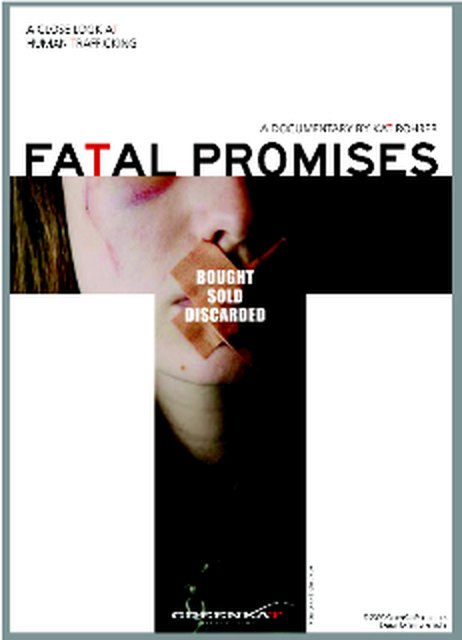
It begins innocently enough. A beautiful young Ukrainian student is promised a student visa to the United States, English lessons and nothing to pay back, and then suddenly she owes thirty thousand dollars. A hard-working but unemployed fisherman is taken to an unmarked vessel in the middle of the ocean, and everything changes. Told through the stories of victims from Ukraine and other Eastern European countries, Fatal Promises, written and directed by Kat Rohrer, is an in-depth, hard-hitting documentary about the brutal realities of human trafficking, a black-market trade second only to drugs.
The filmmakers chose not to go the film festival route. Greenkat Productions, with Kat Rohrer, her mother Anneliese Rohrer and Tom Greenman, took the film to the streets themselves, opening at Cinema Village in New York in September 2009, with a special screening at the Ukrainian Institute of America.
Several high-profile advocates speak out in the film, and I had the good fortune to catch up with Emma Thompson. Our conversation ran the gamut: the film itself, which she called meticulously researched, the political rhetoric that keeps real action from happening, and ways to formulate a plan that would put a halt to this global problem.
She also described The Journey, an installation she was promoting, developed with a woman who had been forced into prostitution and wanted others to see what it could be like for just five minutes. Seven large transport containers depict the steps from entrapment to the abyss, and finally rejection, when no one believes your story. When it was set up in Trafalgar Square, more than 14,000 people walked through it, and it was coming to New York that November. Her plea stayed with me: under the current governing watch across the world, the twenty-first century ought not to be written up as the century a new slave trade began.
In a follow-up episode, I talked with the mother-daughter team of Kat and Anneliese Rohrer about making the film and what they hoped people would take away from it.