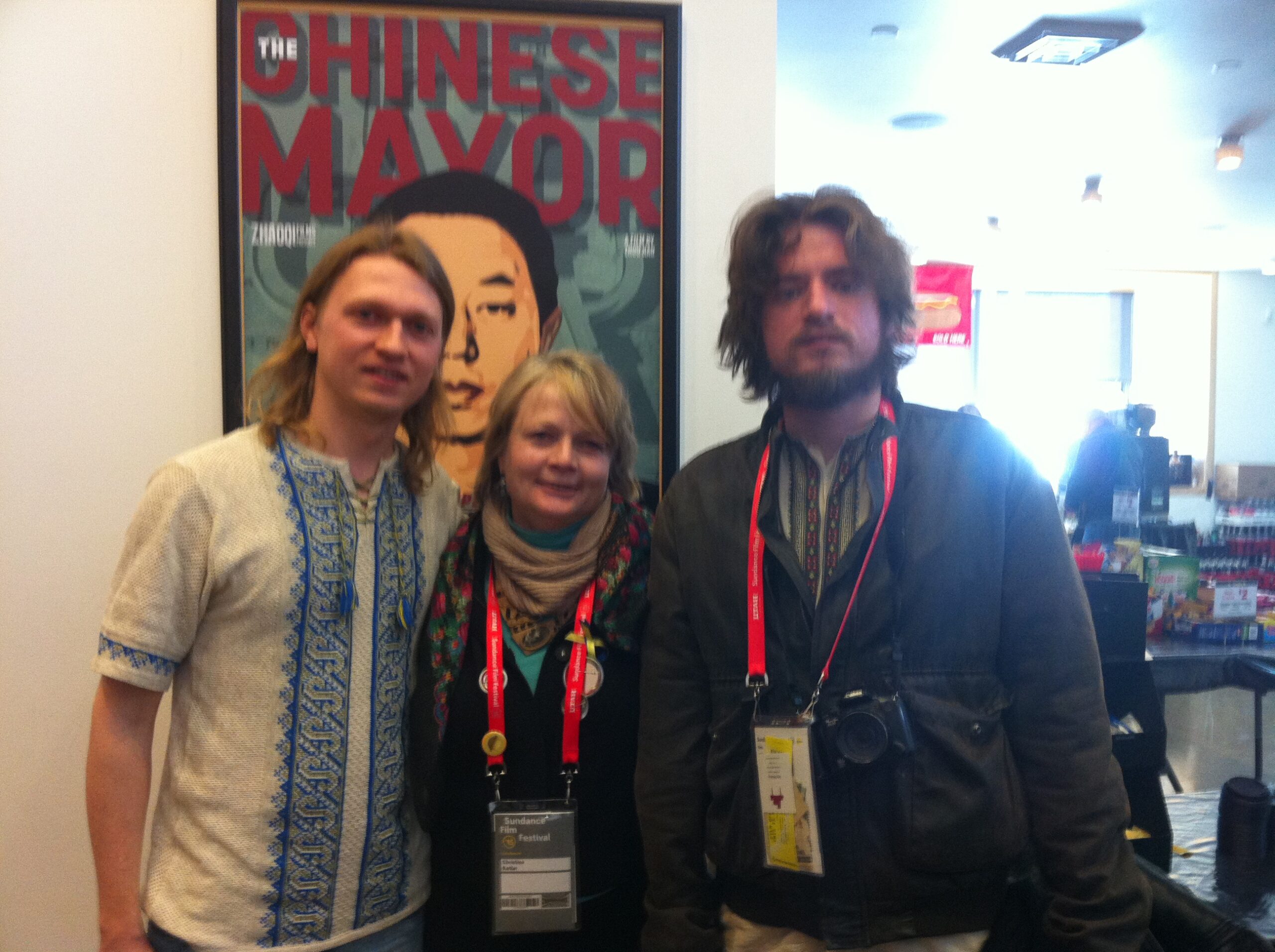
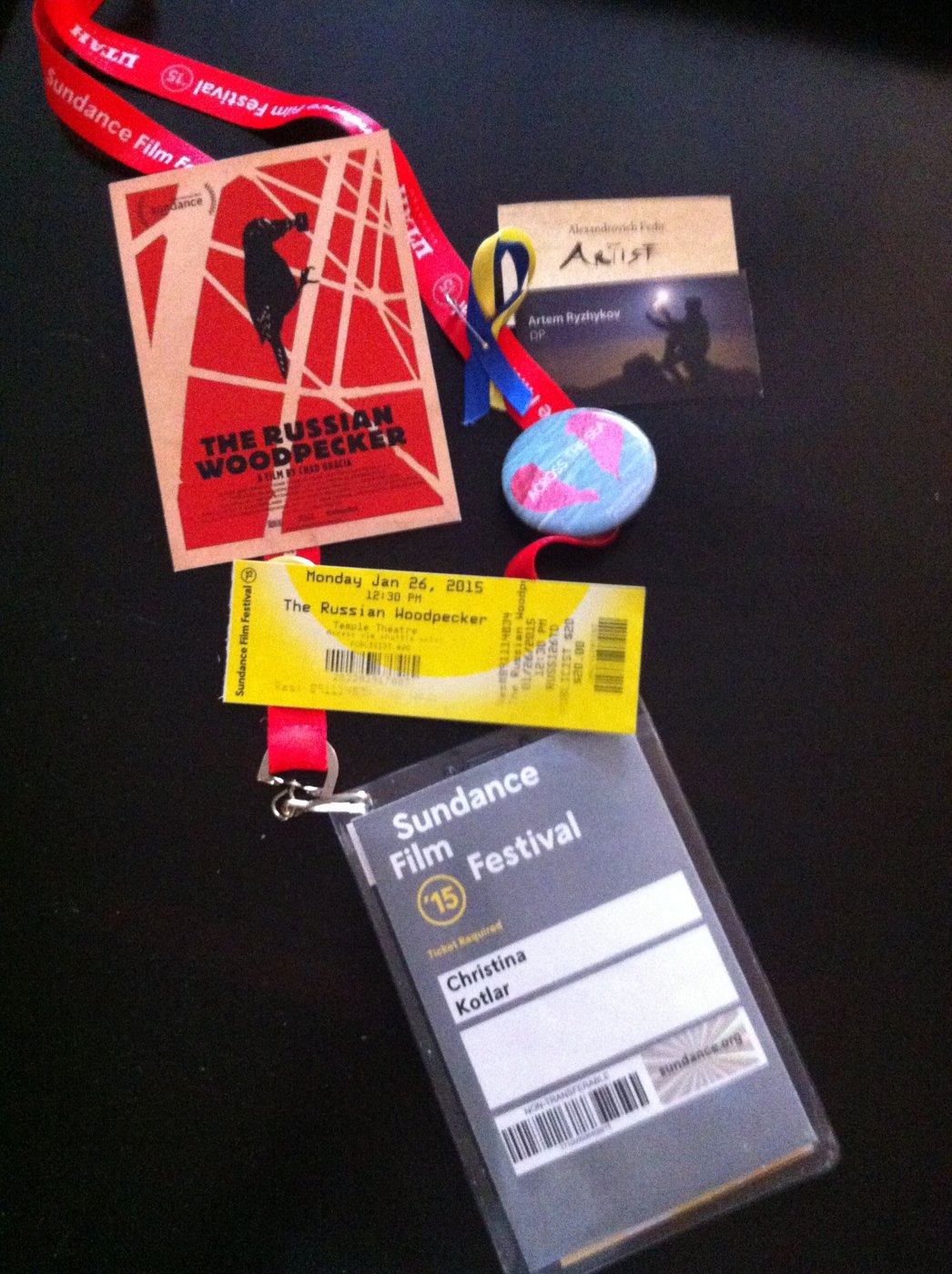
Diabolical, sinister, evil are but a few choice words that come to mind after witnessing the world premiere of The Russian Woodpecker: a mind-blowing detective trail leading to a jaw-dropping assertion that the Chernobyl nuclear disaster was no accident, but a cold and calculated decision made by a call from Moscow.
The Sundance catalog described a Ukrainian victim of Chernobyl who discovers a dark secret and must decide whether to risk his life revealing it, amid growing clouds of revolution and war. That is only the beginning.
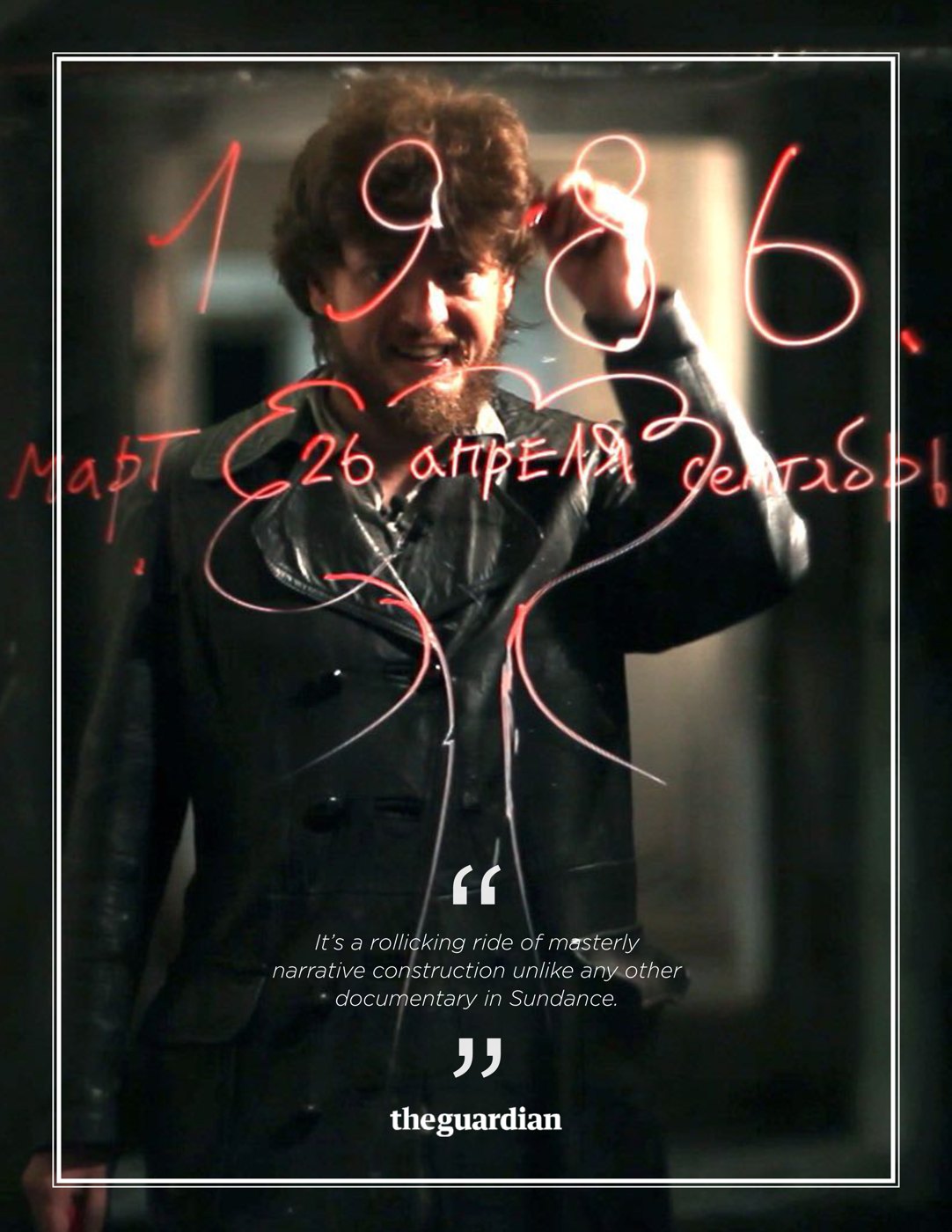
Fedor and Artem
Fedor Alexandrovich, artist, pacifist and humanitarian, became a Chernobyl “orphan” by age four, taken from his parents out of the radiation hot zone. He grew up asking how a tragedy affecting millions of people and generations to come could be an “accident,” and who was responsible. Investigations and documents were missing, incomplete or classified. Then a friend’s father, a pilot who had flown over the radioactive cloud, described something under it: a structure emitting a bluish light, directly across from Reactor Number 4.
An artist’s mind is wired differently. It only needs a trace, a fragment, an offhand remark to turn into an “Aha” moment. Just as Dr. Watson accompanies Sherlock Holmes into the labyrinths of deduction, cinematographer Artem Ryzhykov follows Fedor with his camera into resistance, dead ends, brick walls and, eventually, the line of fire. Brilliantly shot, at times undercover, it captures the trail of testimony at great personal risk.
The Woodpecker
The “Duga” transmitter was an experimental Soviet over-the-horizon radar. Its pulsing signal sounded like a woodpecker on the radio, and it was dubbed the Russian Woodpecker. It interfered with communications channels around the world, including emergency frequencies for transoceanic flights, and in the end it became worthless technology for the Soviets, at enormous cost. Personal statements and substantial corroboration in the film support a theory that a bureaucrat’s decision to save his career precipitated an unimaginable crime against the natural world and humanity.
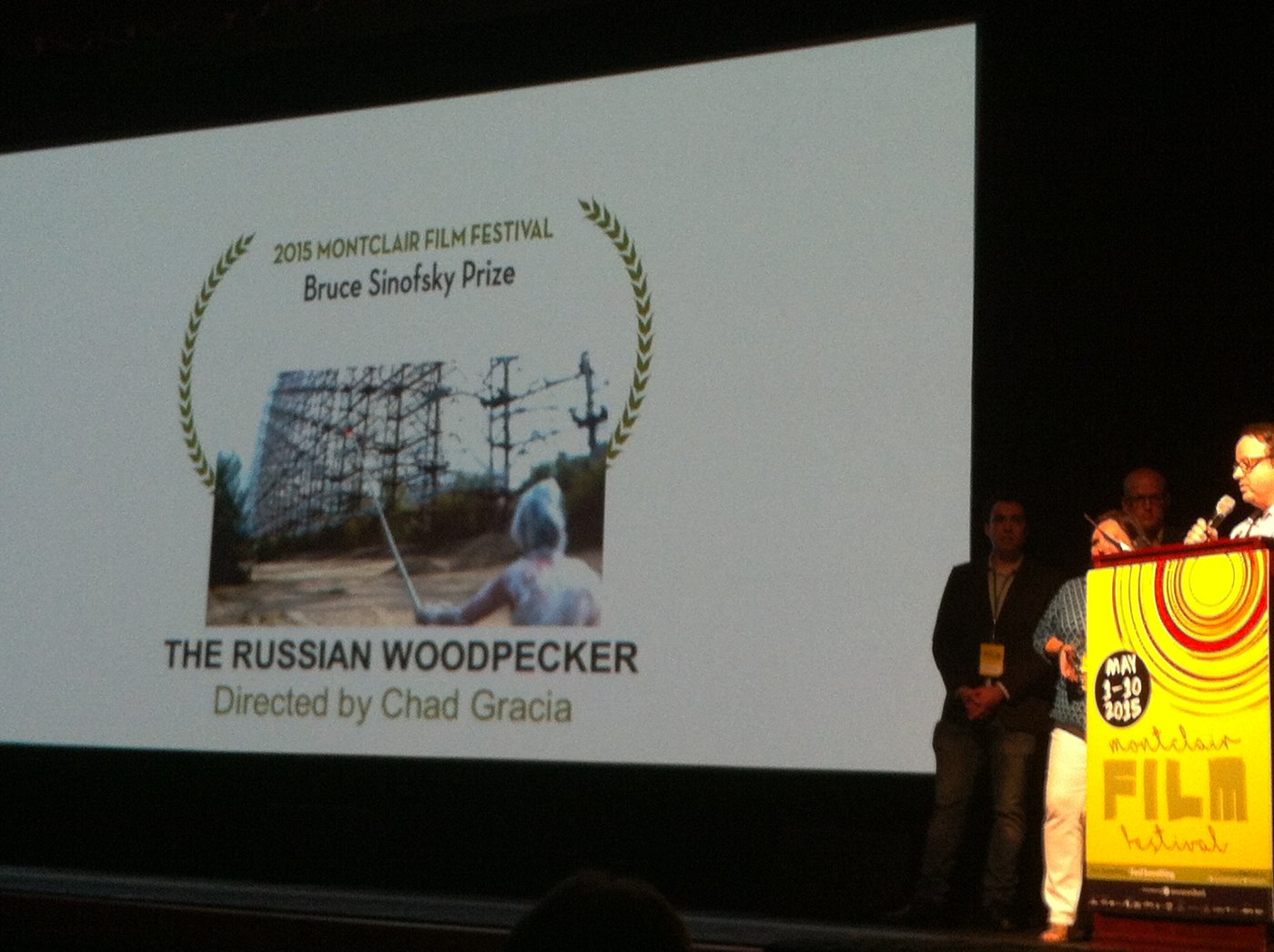
Chad Gracia weaves archival footage together with Fedor’s art and connects it all to the events on the Maidan in Kyiv. At the end of the world premiere there was a standing ovation for this cautionary tale. That spring at the Montclair Film Festival it won the Bruce Sinofsky Prize, and as Yuri remarked, the score was beautifully placed: intimate and tastefully subtle. In a way, it is a Russian woodpecker that is sounding an alarm.
Artem and Chad, today
Artem’s story did not end in Park City. When Russia launched its full-scale invasion of Ukraine in 2022, he joined the army to defend his country, and today he is a soldier on the front lines fighting the Russian invaders. He did not put down his camera. His documentary A Simple Soldier, co-directed with Juan Camilo Cruz and filmed over nearly four years at the front, premiered at Sheffield DocFest in 2025 and went on to the Toronto International Film Festival. The cinematographer who followed Fedor into the line of fire is now living it, and still bearing witness.
Chad Gracia has stayed close to Ukraine, too. He founded the Kyiv Cinema Society, which screens films at Kino42, an underground movie theater in Kyiv’s Podil district that can also serve as a bomb shelter. When the air raid sirens sound and most theaters stop their screenings, the projector there keeps running. I get Chad’s email newsletters about the independent cinema being shared in Ukraine, and every one is a reminder of what this film started: art as a way of not cowering.