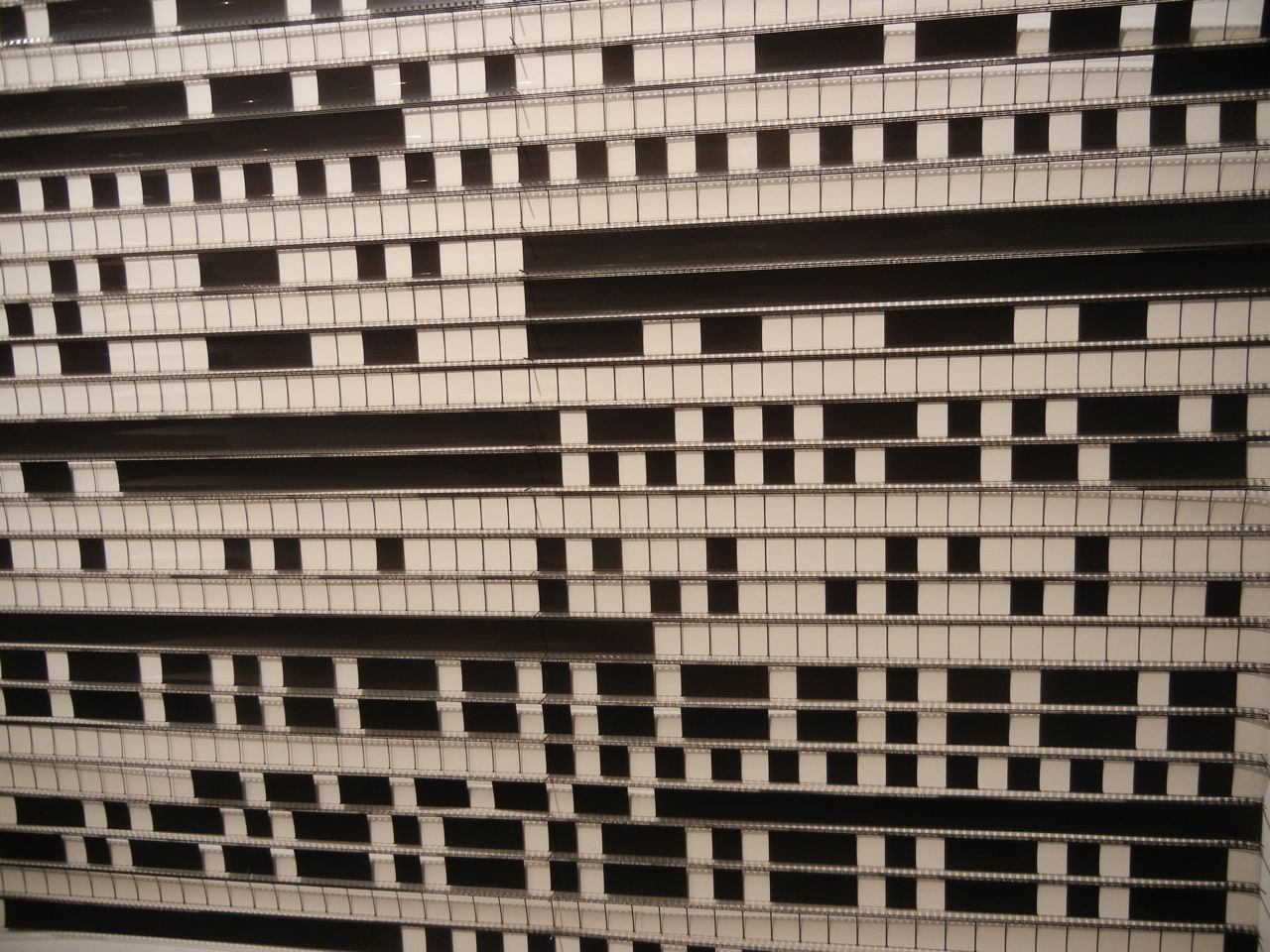
We’re still talking about this Special Event, presented at the beginning of the second week of the 50th New York Film Festival. You could say we are still under the “Kubelka Spell,” experiencing the “here and now” and creating new art forms in the moment. That’s where this ride took me, by surprise, and I was stunned for some time afterwards. It’s also why I asked Yuri to guest blog about the fascinating life’s work of the artist Peter Kubelka.
Yuri Turchyn: Peter Kubelka, the Austrian film fundamentalist, presented his Monument Film at the 50th New York Film Festival this October. The two films, Arnulf Rainer, named after his friend, and its polar opposite, Antiphon of 2012 (what was black is white and vice versa), were shown as single entities and then superimposed using two projectors and projectionists with two separate speakers.
Kubelka’s theory is that film, in its purest form, is made up of four elements: light and no light, sound and silence. The spectator is bombarded with stroboscopic light and white noise at loud volumes as the most basic of viewing experiences. The result is sense-attacking, storyless, color- and image-free structuralism, pushing abstraction and minimalism to the maximum with metrical variations.
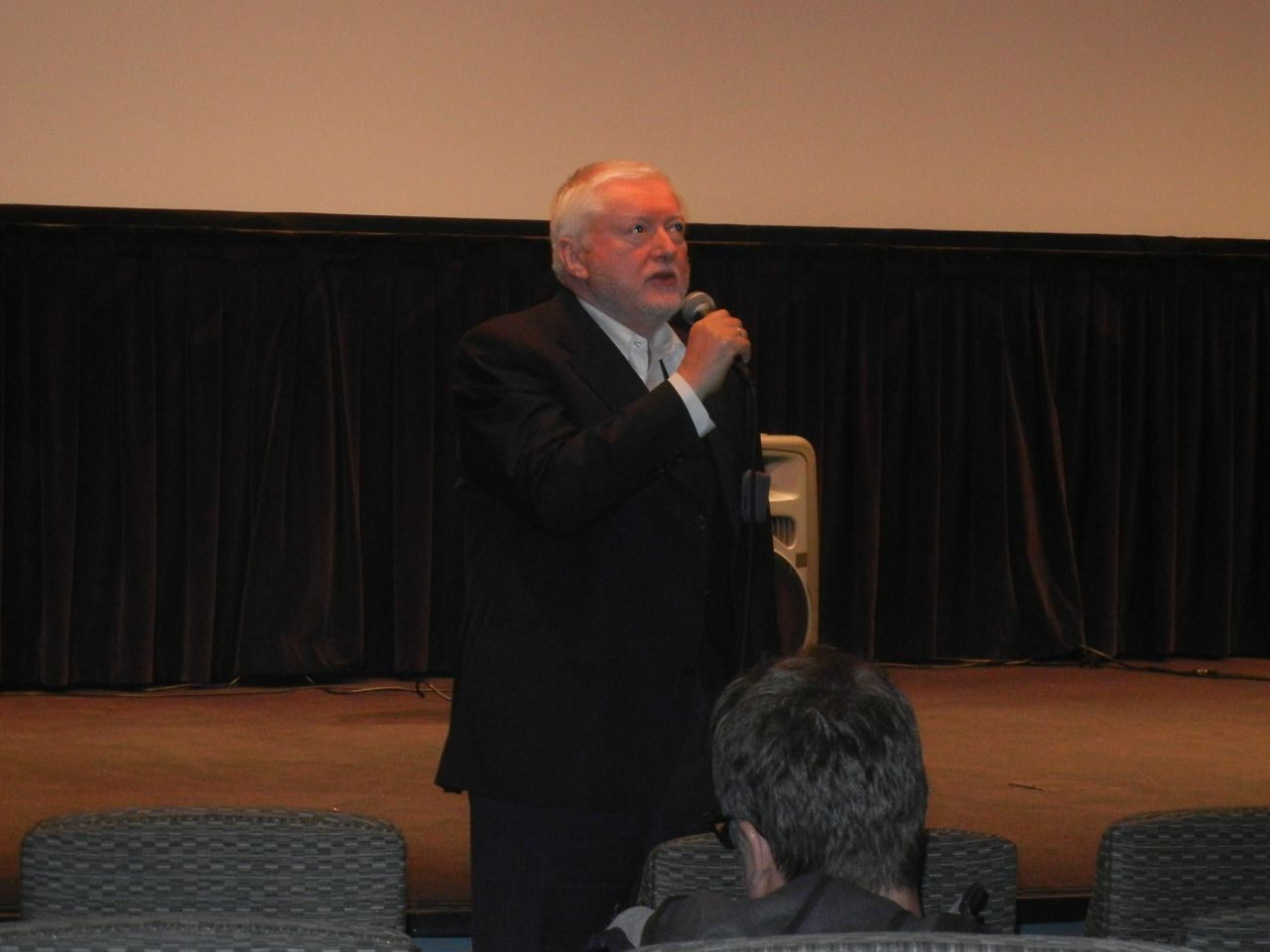
The cineaste conveyed his philosophy of film before each of the two pieces. In essence, film is a “here and now” experience for the spectator. The theater should be dark, with no other light or sound interference. “Antiphon” is a term used in church music to signify the response, the counterchant, in a choral piece, and it ties in with Kubelka’s idea of cinema as an alternative form of liturgy. Viewed separately, Arnulf Rainer and Antiphon mirror each other. Superimposed, they convey even more of the intensity of the viewing experience.
I attended Kubelka’s Monument Film with Christina by pure coincidence. We’d been writing and critiquing for a few days and getting the lay of the land of the NYFF when one of the films we wanted to attend as press was sold out. In this quandary we decided to take a dive into the waters of the avant-garde. Behold the great Kubelka. Neither of us knew who he was. And we thought we were on top of our game.
We came under the “Kubelka Spell.” At 78, the man was culminating his career with a retrospective of his works, which really amounts to an hour of cinema. Minimalism to the max! Our experience as indie film mavens was shaken out of its comfort zone. No images, no story, no music. Popcorn and other delights were so inappropriate at this showing. We both wore sunglasses and put our fingers in our ears to stay the onslaught.
What resulted afterwards was surprising. Christina left the screening room with a headache and complete confusion. I was lost in translation. But since the night we viewed these films and listened to the high-poobah speak and elucidate, we have talked and disseminated non-stop about this experience. That is some influential filmmaking.